
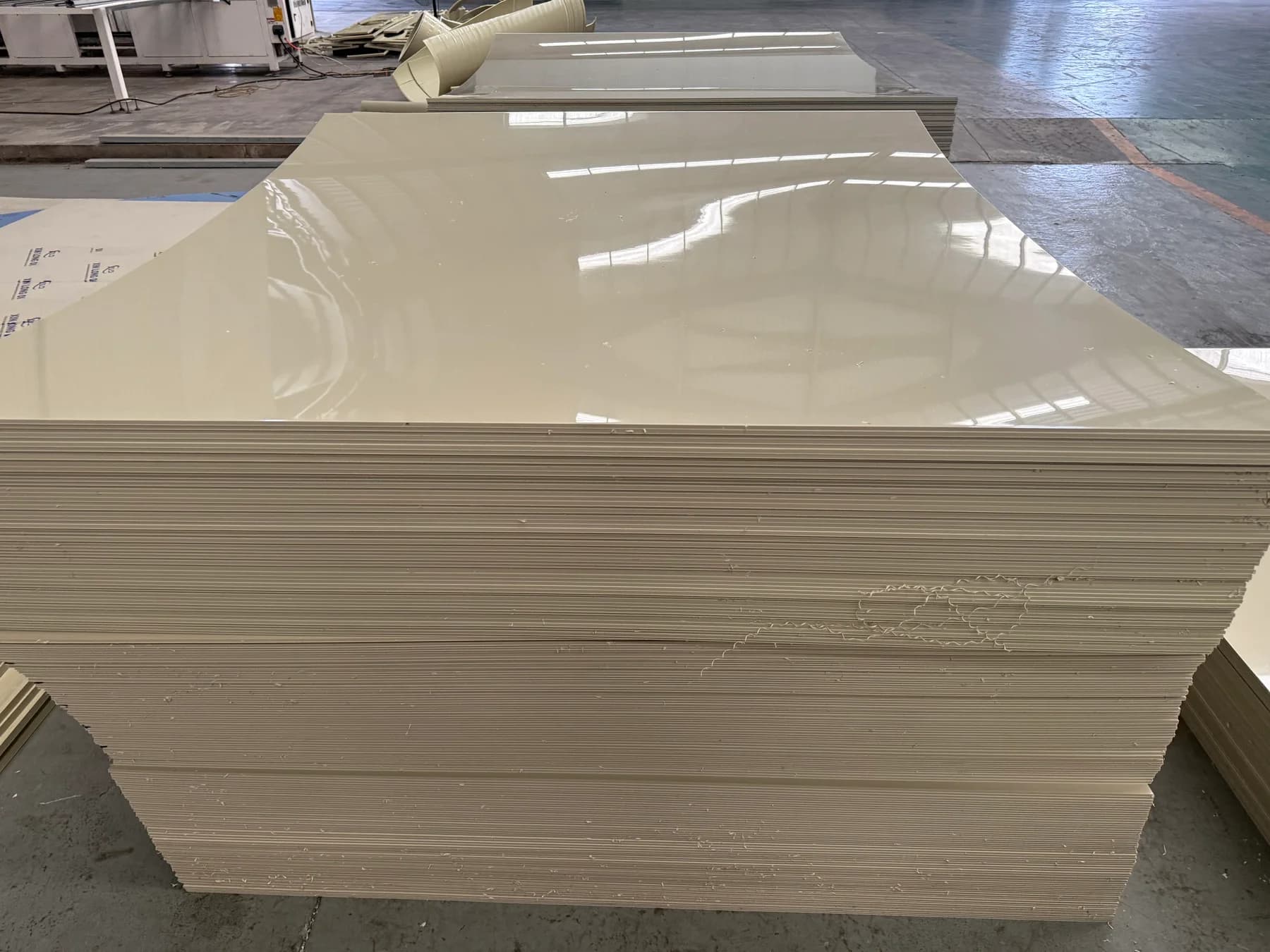
General procurement guidance; not a project-specific design approval.
Where PP sheets fit in a RAS
PP sheets for recirculating aquaculture systems (RAS) can be fabricated into tank walls, partitions and flow guides. A RAS returns treated water to the culture tanks. A typical arrangement collects water and waste from the fish tanks, removes suspended solids, passes water through biological treatment, and restores dissolved oxygen before return. Carbon dioxide removal, disinfection, makeup water and discharge may be required, depending on the system design. Equipment order and whether water moves by gravity or pumping vary with the layout.
Polypropylene sheet can form the tanks and partitions around these processes. A screen or other mechanical separator captures solids. In a biofilter, bacteria convert ammonia to nitrite and then nitrate. The PP tank shell provides containment. The media, aeration and operating conditions govern the biological stage. The system design must also account for nitrate accumulation, for example through planned water exchange or dedicated treatment.
Fish tanks, mechanical filters and MBBR chambers
PP sheets for fish farming tanks
For a fabricated fish tank, agree the maximum operating water level, drain position, overflow and access before quoting. Identify where a floor, stand or frame supports the shell. Coordinate the bottom profile, outlet and inlet arrangement with the system designer so that solids can reach the drain. Specify the largest shipping section and whether joints will be completed at the factory or on site.
Mechanical filter tanks
A sheet-built chamber can house a screen, drum filter or settling arrangement where the equipment design permits. Give the fabricator the mounting footprint, clean and dirty water levels, wash-water drain, bypass or overflow and the clearance needed to remove the filter. A clogged screen can increase the difference in water levels across a partition. Include that condition and the equipment's loads in the design brief. Provide separate support for heavy equipment where the design calls for it.
PP biofilter tanks for MBBR
A moving bed biofilm reactor (MBBR) uses mobile carriers for biofilm growth. Aeration commonly supplies oxygen and keeps the carriers moving in an aerobic nitrification chamber. The outlet retention screen keeps the carriers inside the tank. Coordinate the screen opening and access with the selected carrier and equipment supplier. Include diffuser supports, air connections, water levels, drain and cleaning access on the drawing. The process designer determines media fill, airflow and treatment capacity from the operating duty.
Sumps, buffer tanks and flow guides
Sumps collect water and provide a pump suction point. The designer must consider the lowest operating level and the volume that can drain back when pumps stop. Buffer tanks can accommodate variations in water volume where the process calls for them. Baffles and flow guides can direct water, separate compartments or help protect pump intakes. Specify the water level on each side in operation and during maintenance, including a full compartment next to an empty one.
Compare RAS filtration tank materials by grade
PP is a material family. PPH or PP-H means polypropylene homopolymer. PP-C identifies a copolymer family. Compare named commercial grades: PP-H is often a candidate where stiffness matters, while suitable copolymer grades may be considered when impact or cold handling matters. Confirm the actual grade and data at the temperatures in use. Trade labels alone do not establish the difference between two offered sheets.
PP sheet can be machined and thermoplastically welded with a compatible material and controlled procedure. It does not rust like steel, but compatibility with the water, salt concentration, cleaning agents and oxidizing disinfectants needs grade-specific review. Record concentrations, temperatures and contact times, along with outdoor UV exposure where relevant. For fish contact or other regulated uses, ask for evidence that applies to the proposed grade and intended use. A polymer family name cannot establish suitability.
What the designer needs for wall thickness
Water pressure increases with depth and liquid density. Panel deflection also depends on the unsupported span, supports, openings, joints and reinforcement. Thermoplastics can deform over time under sustained load. A cold-water tank and a warmer tank with the same dimensions may therefore require different checks. Give the designer maximum levels, empty and partial-fill conditions, support details, temperature range, equipment and piping loads, and any abnormal pressure or vacuum. The designer determines the wall, base, weld details and reinforcement for that duty. Show the unsupported panel dimensions and where the reinforcement attaches. Mark nozzle loads or specify which pipes have independent supports. A stock thickness or a dimension from another tank is insufficient.
Request a Quote for PP Sheets and Custom RAS Components
XLD Plastics supplies industrial PP sheets and PPH sheets. For bulk sheets, CNC-cut panels or custom welded components, see custom fabrication and the aquaculture application information. Ask us to confirm the grade, supply and fabrication scope against your drawings.
- For sheet orders, send grade or required properties, thickness, sheet size, colour, quantity and destination country.
- For fish tank and filter chamber parts, include revision-controlled drawings, cut list, nozzle positions and mating connections, operating and cleaning conditions, water levels, supports and acceptance criteria.
- Distinguish the parts to be supplied from equipment, structural design and process design. Ask which inspections, packing and documents can be included.
FAQ
Can PP sheet remove ammonia or disinfect RAS water?
The sheet provides containment. Nitrification occurs in the biofilm. Disinfection, when specified, is performed by a separate treatment stage.
How do I specify PP sheet thickness for a fish tank?
Start with the maximum water depth and liquid density. The design also needs panel spans, temperature, support and reinforcement, joints and sustained loading. Send the drawing and service conditions for review.
Can the supplier quote CNC-cut panels or welded assemblies from my drawing?
Send the latest revision, quantity and desired supply scope. Ask the supplier to confirm the material, processing, interfaces and inspection requirements before release.
Sources & scope
Discuss your application
Bring the material, dimensions and operating conditions. We will review the requirements for your project.
Request a Quote