
General procurement guidance; not a project-specific design approval.
Resolve the material name before comparing prices
An offer for “PVC sheet” is incomplete when the equipment specification calls for a particular PVC type. Before comparing thickness, price or delivery, ask the supplier to identify the proposed material designation and commercial grade. A similar colour or surface finish is not evidence that two sheets can replace each other.
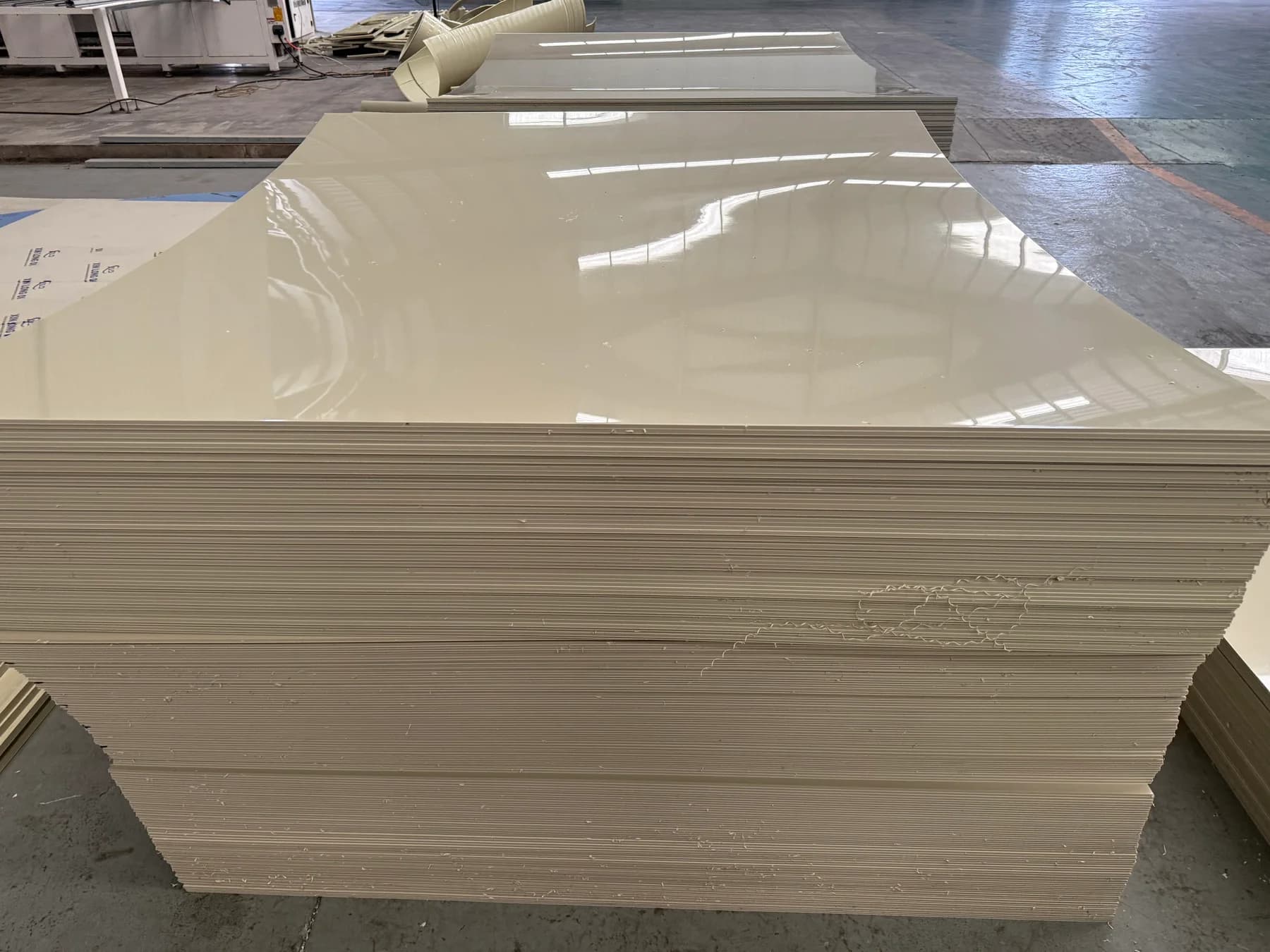
This guide explains how to handle a PVC-U or PVC-C requirement in an industrial sheet inquiry. It does not approve a material for a chemical process. XLD’s PVC sheet and fabrication page describes its current offering; availability of a specific PVC type or grade must be confirmed in the quotation. Mentioning PVC-C here is not a claim that XLD supplies it.
What PVC-U and PVC-C tell a buyer
PVC-U identifies unplasticised polyvinyl chloride. Vinidex’s PVC overview explains the terminology in a piping context. That definition helps identify the polymer type; piping ratings do not establish the suitability of a sheet or fabricated vessel.
PVC-C identifies chlorinated PVC. GEHR describes its PVC-C as post-chlorinated PVC-U and publishes separate information for its PVC-U product. These are distinct material descriptions, not evidence that any PVC-C sheet can replace any PVC-U sheet. The cited manufacturer’s properties belong to its own products and are not XLD specifications.
Neither designation alone settles the exact formulation, sheet dimensions, manufacturing route, inspection requirements or suitability for a particular assembly. A buyer still needs an identifiable proposed grade and evidence relevant to the intended service.
Use the equipment duty to frame the choice
Start with the part’s function. Is the sheet being purchased for a machine guard, a duct panel, a removable cover, an enclosure or a liquid-contact component? These are possible specification scenarios, not examples of completed XLD projects. The same panel dimensions can hide very different exposure and acceptance requirements.
Write a short duty statement covering:
- Contact conditions: identify each chemical or mixture, its concentration, cleaning agents and whether contact is continuous, intermittent or incidental.
- Temperature conditions: distinguish normal operation, cleaning, start-up and credible upset conditions. Provide the project values rather than asking the supplier to assume them.
- Mechanical conditions: describe support, loads, vibration, impact, pressure or vacuum where relevant, and supply the equipment drawing.
- Environment: state indoor or outdoor use, exposure and any required fire, electrical or regulated-contact evidence.
- Supply boundary: identify sheet only, cut panels, machined parts or a fabricated assembly, including who is responsible for design and installation.
Ask the responsible material specialist or equipment designer to resolve suitability against that duty. A general description such as “chemical resistant” is not a project-specific approval. A material comparison cannot replace verification of a fabricated component’s design.
Treat a proposed substitution as a separate decision
If a drawing says PVC-U and an offer says PVC-C, do not accept the change simply because the supplier describes it as an upgrade. The reverse substitution also needs review. Record the original requirement, proposed alternative, reason for the change and the documents supporting it.
A useful substitution review asks whether the proposed sheet matches the material specification, fabrication method, joining materials, service conditions and inspection plan. Identify which party has authority to approve the change. Keep written approval tied to the drawing revision and quotation line, rather than relying on an informal email saying “PVC is acceptable.”
If the supplier cannot identify the proposed type, put that line item on hold. Request a corrected quotation with the designation stated explicitly. Do not silently change the project specification to match an ambiguous offer.
Make sheet and fabrication quotations comparable
Give each item a reference and define whether dimensions refer to a full sheet, a cut blank or a finished part. State length, width, thickness, quantity, tolerances and surface requirements. Highlight dimensions that control fit or sealing, and let the supplier identify exceptions before order acceptance.
For fabricated work, attach the assembly drawing and identify joints, openings and mating components. Request confirmation of the proposed sheet and joining-material combination. Have the responsible fabricator define the applicable process and inspection evidence; this article does not prescribe welding settings or joint dimensions.
For a cover with machined holes, for example, send the hole pattern and interface drawing as well as the outer dimensions. For a duct panel, identify the adjoining parts and installation scope. These examples show what information makes an inquiry reviewable; they do not promise that a particular material or fabrication scope has been accepted. The CNC drawing checklist can help specify finished features.
Request documents that answer a defined question
Ask for a data sheet identifying the actual proposed product and its revision. If a property is important to acceptance, specify the required evidence and test conditions for review. A general brochure, a photograph and a batch record answer different questions; none automatically proves suitability for the complete equipment.
Use a sample to assess a defined issue such as finish, colour or a fabrication trial. Identify the sample’s grade and its relationship to the proposed order. Agree any additional testing or compliance documents before ordering rather than assuming they come with every sheet. XLD’s material document hub provides a route for document requests.
Send an inquiry with the open questions visible
A concise inquiry can state: “The attached drawing specifies PVC-U. Please identify the exact material and grade you propose, confirm the dimensions and fabrication scope you can quote, and list available supporting documents. State any deviation separately for our review. Do not substitute PVC-C or another formulation without written approval.” This is an illustrative RFQ, not a customer case.
Add quantity, destination, requested delivery and packing requirements. Use the Purchasing Guide for existing commercial information and the PVC sheet inquiry to submit the specification. If the type or application evidence remains unresolved, request technical clarification before approving the purchase.
Sources & scope
Discuss your application
Bring the material, dimensions and operating conditions. We will review the requirements for your project.
Request a Quote