
General procurement guidance; not a project-specific design approval.
The short answer
Choose PP sheet thickness from the part geometry, support spacing, loads, service conditions and fabrication requirements. Do not select it from the material name alone. For a load-bearing panel or tank wall, obtain an engineering review before turning a nominal thickness into a purchasing specification. Final thickness must be confirmed for the actual material, support and installation conditions; this guide does not calculate structural capacity.
First define the part’s job
A cover, lining, machined part and liquid-retaining wall have different design questions. Start the RFQ by saying whether the sheet is a stock material, a finished component or part of a welded assembly. A supplier can then separate supply availability from the engineering decision.
Five inputs for a thickness review
- Geometry and support: provide length, width, unsupported span, support locations, cut-outs and connections. A sketch is more useful than an overall dimension alone.
- Loads: identify what acts on the panel or assembly, how it is supported and how long the load remains. Include handling and installation conditions.
- Service environment: specify process media, concentration, temperature, exposure and cleaning. Outdoor exposure or changing conditions should be stated explicitly.
- Fabrication requirements: list cutting, machining, forming or welding operations and finished dimensional acceptance requirements.
- Design responsibility: identify who checks the structural design, the required design basis and the documents needed for acceptance.
Thermoplastic design must consider time-dependent behaviour. SIMONA’s technical handbook discusses long-term material data, deformation and stiffness in tank design. It is a general reference, not a thickness calculator for a Xin Longdi product. Read the structural-design discussion in the handbook.
Supply range is not a design recommendation
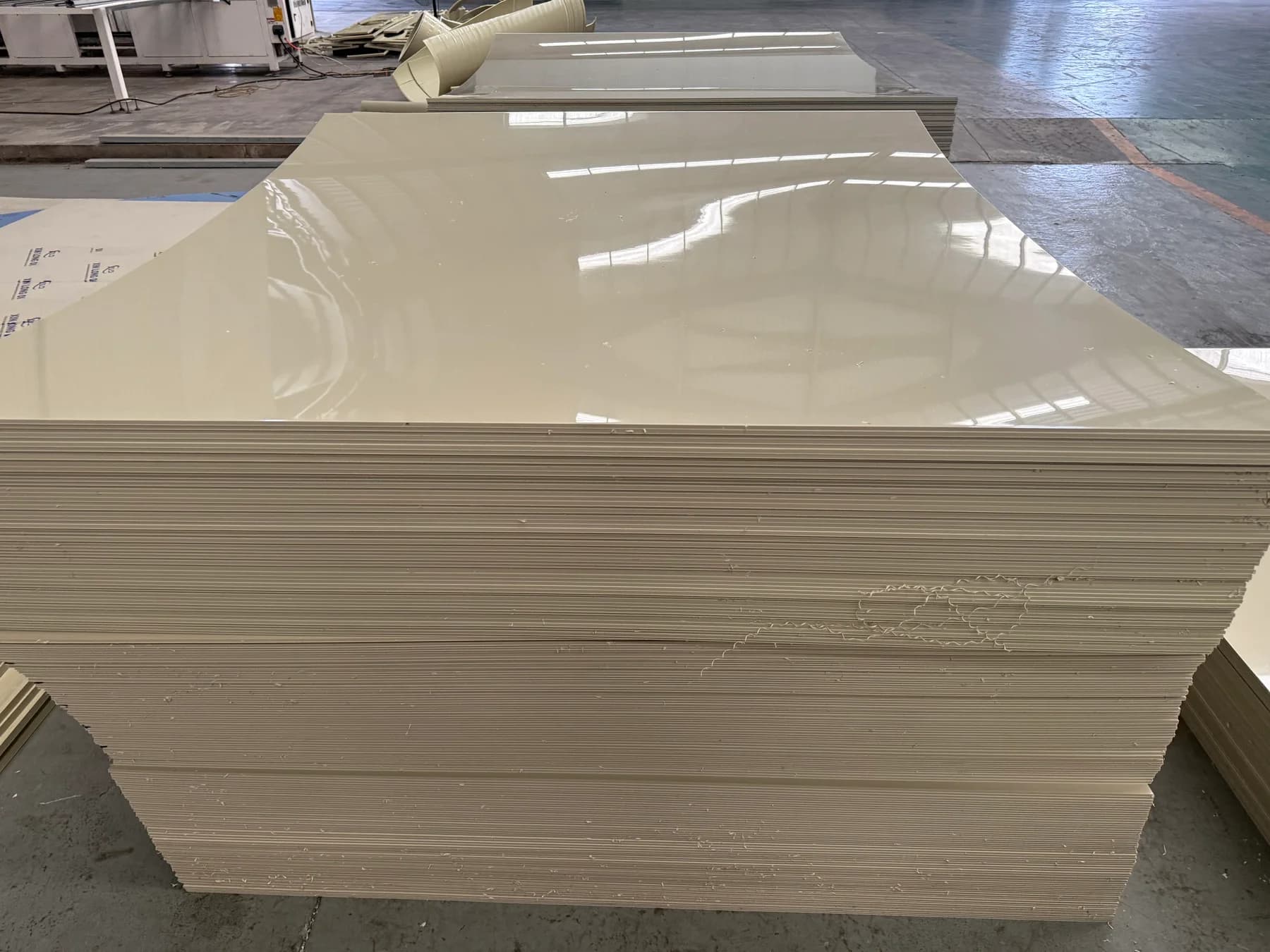
Xin Longdi has confirmed that PP sheet and PPH sheet name the same product in its business; the thickness review described here applies to that sheet inquiry. The confirmed PP Sheet specifications list 3–40 mm thickness and width up to 3.6 m. Length is reviewed against the order, transport and handling requirements. These are supply statements, not a recommended thickness for a particular tank, span or chemical duty. The exact order combination, commercial grade and acceptance requirements still need confirmation.
Routine PP sheet thicknesses are 3–40 mm. Thicker specifications may be evaluated for large-volume orders, subject to confirmation by our technical team.
A drawing should distinguish L = length, W = width and t = thickness, and identify whether the dimensions refer to the purchased blank or finished part. A dimension-direction illustration does not establish tolerances or scale.
Avoid three common RFQ gaps
An overall size without support details
Two panels with the same outer dimensions can have different support arrangements. Include a section or mounting sketch so the review does not rely on assumptions.
A thickness copied from another project
The earlier project may use a different resin, span, liquid level or temperature. Provide the present design basis and ask whether the previous choice is still applicable.
A finished thickness without machining scope
State the blank dimensions and the finished geometry separately. Agree any allowance and dimensional acceptance requirements with the manufacturer; do not assume a standard machining allowance.
Questions buyers ask
Is a thicker sheet always the better choice?
No universal choice follows from thickness alone. It affects handling, weight, cost and fabrication, while suitability still depends on material and design. Ask for a reviewed selection rather than increasing thickness arbitrarily.
Can Xin Longdi work from my drawing?
Drawing-based machining and fabrication are part of the confirmed Custom Fabrication scope. The actual part and its acceptance criteria are reviewed individually; no general tolerance is promised here.
Can you recommend a tank wall thickness from capacity alone?
Capacity is insufficient. Supply the tank geometry, liquid and density information, conditions, supports, nozzles and applicable design requirements. Tanks & Vessels is the relevant inquiry route.
Make the inquiry actionable
Provide a drawing or dimension list, the part’s function, material if known, quantity, support/load details and operating conditions. If design approval is outstanding, identify it in the inquiry. Request a PP sheet review.
Sources & scope
Discuss your application
Bring the material, dimensions and operating conditions. We will review the requirements for your project.
Request a Quote