
General procurement guidance; not a project-specific design approval.
PP and PPH: the distinction that matters
PP is the material family name for polypropylene. PP-H, often written PPH, means polypropylene homopolymer: one type within that family. It is therefore misleading to compare “PP” and “PPH” as if they were always two unrelated materials. A quotation that says only PP leaves the material type and commercial grade unresolved.
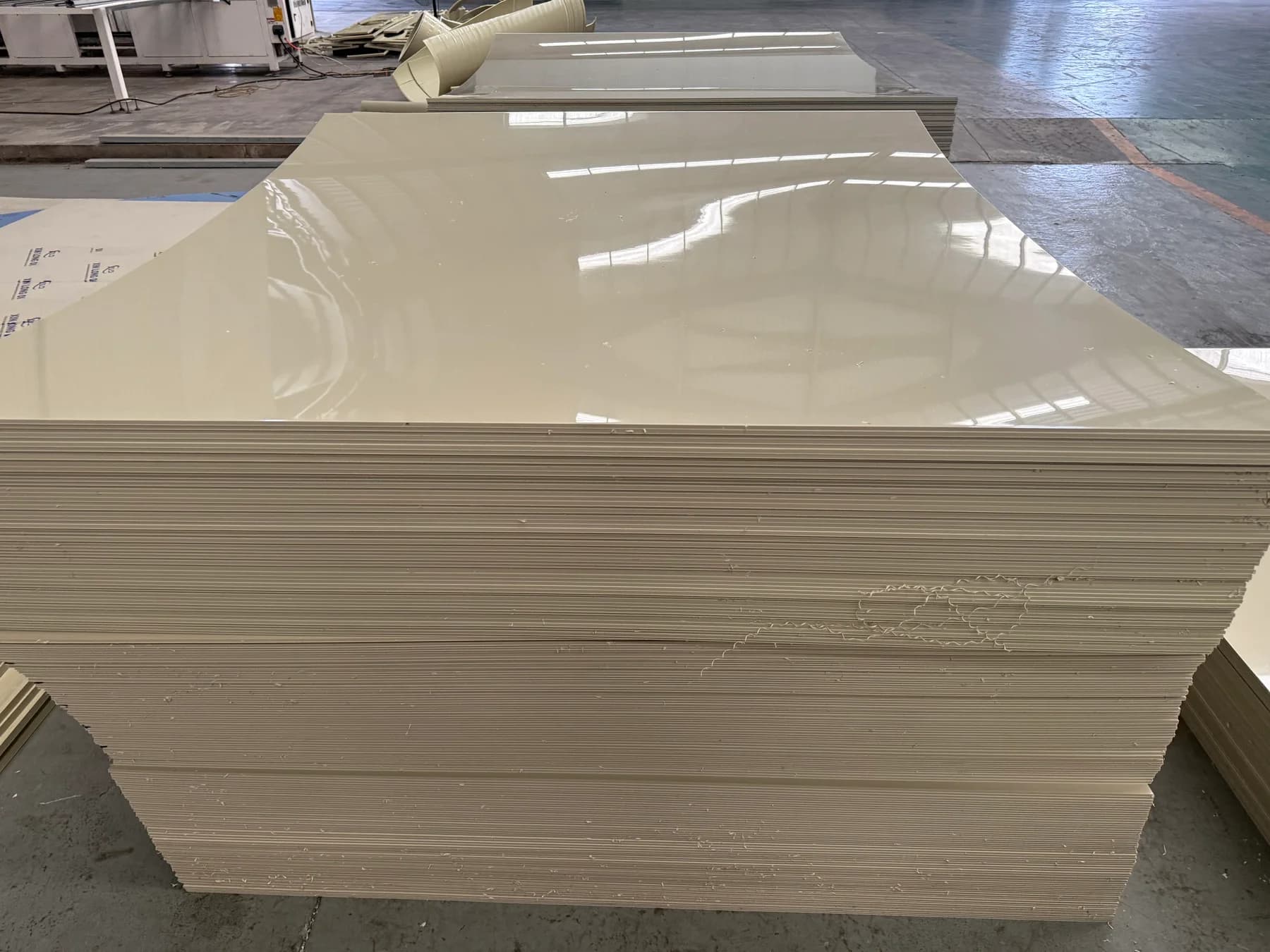
XLD Plastics (Xin Longdi) uses PP sheet and PPH sheet for the same sheet product in its own business. Its separate PP Sheet and PPH Sheet pages do not establish two different resin formulations. Buyers should confirm the actual grade on the quotation rather than infer a performance difference from the page name.
Material family, polymer type and commercial grade
The useful comparison has three levels:
- Family: PP identifies polypropylene broadly.
- Polymer type: PP-H identifies homopolymer. PP-B and PP-R identify block and random copolymers respectively. Some suppliers also use PP-C as a copolymer label; ask what their designation means.
- Commercial grade: the named resin or sheet grade and its formulation determine which supplier data and processing guidance apply. Colour, additives, reinforcement and recycled-content requirements belong in the order specification.
Röchling’s chemical-processing guide distinguishes the PP types and discusses industrial uses. Its product data describe its own materials; they are not XLD performance specifications. Mentioning PP-B or PP-R here does not claim XLD supplies those types.
Two sheets labelled PPH can still have different formulations, tolerances and documentation. Neither the label nor a photograph proves chemical suitability, UV stability, flame performance, food-contact compliance or a particular service life.
Select for the operating conditions
Start with the duty the sheet must perform, then ask the supplier to identify a suitable grade and the evidence supporting it.
- Chemical exposure: list each medium, concentration, mixtures, cleaning agents and contact duration. A compatibility statement for one chemical does not cover every mixture or cleaning cycle.
- Temperature: state normal operation, startup, cleaning and short excursions. Ask for grade-specific guidance under the actual load and exposure; do not treat a single published temperature value as an equipment rating.
- Mechanical duty: describe loads, spans, supports, impact, vibration and intended service period. Sustained loading and deformation need consideration in fabricated equipment.
- Environment: identify outdoor exposure, cold handling, abrasion, electrical requirements and any regulated contact use. Request evidence for the particular requirement rather than assuming ordinary PP-H covers it.
- Processing: confirm whether the order is for full sheets, cut panels, machined parts or welded assemblies. Agree compatible welding material and the proposed fabrication process where relevant.
Röchling’s chemical-resistance guidance explains why conditions such as concentration and temperature affect selection. Use generic references to frame questions; obtain the proposed grade’s evidence before accepting a recommendation.
Common industrial sheet applications
PP-based sheets are used in chemical-process fabrication, water-treatment equipment, exhaust-air handling and industrial components. Typical selection discussions include:
- Process and treatment tanks: panels, partitions and fabricated components, subject to chemical compatibility and structural design.
- Scrubbers and ventilation equipment: housings, ducts or internal parts where the chemical exposure, temperature and fire requirements have been reviewed.
- Water-treatment systems: covers, partitions and equipment components with the necessary load, support and contact requirements specified.
- Machined and welded parts: drawing-based brackets, panels and assemblies where dimensions, tolerances and joining details are agreed.
These are application categories, not claims about completed XLD customer projects. Sheet supply dimensions do not establish safe tank-wall thickness, pressure capability or suitability for an unsupported span. A tank or other load-bearing assembly needs its own design review. See the sheet-thickness selection guide for the information to prepare before discussing thickness.
When to confirm the grade before ordering
Pause material selection if the quotation says only “PP,” “PPH” or “equivalent” without identifying what will be supplied. Obtain written clarification when replacing an existing grade, changing supplier, welding to existing equipment, handling mixed chemicals, or specifying outdoor, cold-service, fire or regulated-contact duties.
Ask whether the available technical data describe the resin or the finished sheet, and whether any inspection report relates to the proposed batch. An ISO management-system certificate is not a sheet test report. A sample can help assess appearance, dimensions or fabrication behaviour, but cannot establish long-term chemical resistance or service life by itself.
If grade-specific documents or suitable test evidence are unavailable, record the gap and resolve acceptance with the responsible engineer before committing to a demanding application. Do not substitute another manufacturer’s data for the actual supply grade.
Turn the selection into a comparable RFQ
Send one specification to every supplier. Include material designation or “grade to be proposed,” thickness and tolerances, length and width, quantity by size, colour and surface requirements, and the application conditions above. Add a drawing revision for cut or machined parts, plus document, sample and inspection requirements.
For example: “Please quote PP/PP-H sheet for the attached application. Required sheet size and thickness: [provide dimensions and tolerances]; quantity: [by size]; medium and concentration: [provide]; operating and cleaning temperatures: [provide]; fabrication: [sheet only / cut / machined / welded]. Please identify the proposed grade, available supporting documents, packaging, lead time and delivery basis.” Replace each bracketed prompt with your project information.
Review XLD’s factory and manufacturing information and fabrication services, then submit a PP/PPH sheet inquiry. For supplier evaluation, samples and shipment planning, continue with How to Source PP and PPH Sheets from a Manufacturer in China.
Sources & scope
Discuss your application
Bring the material, dimensions and operating conditions. We will review the requirements for your project.
Request a Quote