
General procurement guidance; not a project-specific design approval.
The short answer
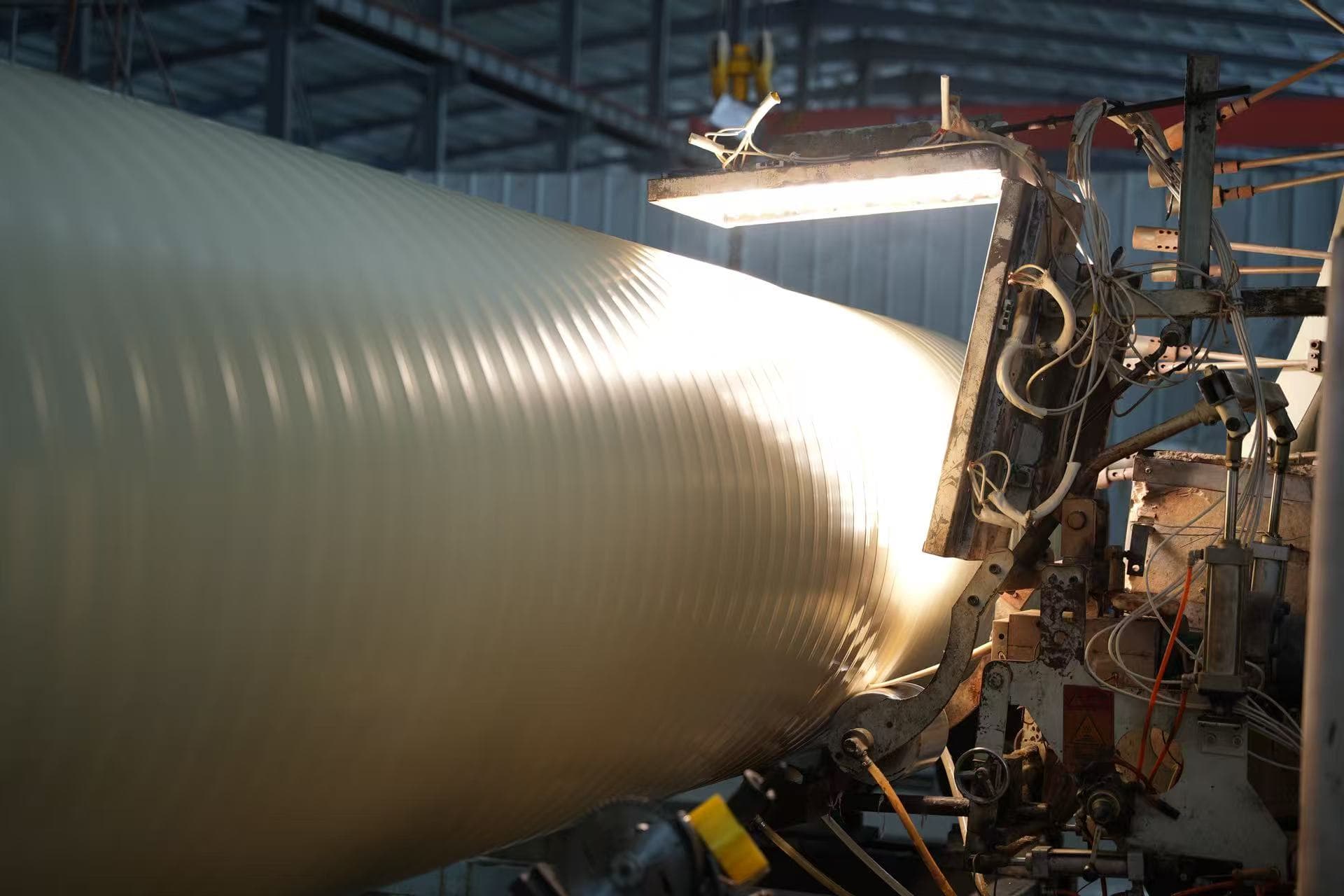
An extrusion-wound PPH tank uses a body formed by extrusion winding as part of a fabricated vessel. PPH / PP-H denotes polypropylene homopolymer. Xin Longdi has confirmed that its PPH wound tanks use extrusion-winding forming. This process name does not, by itself, establish chemical compatibility, pressure capability or a complete vessel design; each application still requires review.
Extrusion-Wound PPH Tank Manufacturing
Xin Longdi uses extrusion winding to form the tank body. In general, extrusion winding combines thermoplastic extrusion and winding to form a cylindrical body. Krah’s cylindrical-tank process reference is an external example of this process family, not evidence of Xin Longdi’s equipment, layer count, wall design, connection methods or manufacturing parameters.
The body is only one part of a vessel. Bottoms, tops where required, connections, access openings, supports and interfaces need project-specific decisions. “Extrusion-wound” does not mean that every joint is absent or that the complete tank is certified for a particular duty. No specific connection method or wall-layer structure is described here.
A practical project-review sequence
- Define the duty: stored or processed medium, concentration, density information, normal and exceptional conditions, and cleaning procedure.
- Define the geometry: working and overall dimensions, liquid level, available installation space and transport constraints.
- Define interfaces: inlet/outlet locations, venting requirements, access, instrumentation and loads from connected equipment or piping.
- Confirm material and design basis: PPH / PP-H identifies the homopolymer material type, not an exact commercial resin grade. Agree the order’s material documentation and obtain a project-specific compatibility and design review.
- Agree acceptance: identify drawings, inspection scope, documentation and any required design approval before production.
This sequence is procurement preparation, not a manufacturing instruction or a complete engineering checklist.
Why project-specific design remains necessary
Thermoplastic vessel design considers loading and long-term material behaviour. SIMONA’s handbook describes structural evaluation using long-term data; it does not certify Xin Longdi tanks or establish their allowable pressure. SIMONA’s general structural-design reference.
Do not infer a pressure or vacuum rating from the cylindrical shape. Likewise, no generic chemical-resistance statement settles a specific mixed-medium application. Send the operating conditions and required design basis for review.
Xin Longdi’s confirmed manufacturing scope
Xin Longdi has confirmed Extrusion-Wound PPH Tank Manufacturing for its PPH wound tanks. The existing Tanks & Vessels page and real manufacturing photographs provide manufacturing context; the process identification comes from the factory confirmation. The established scope also includes custom PP/PPH tanks, plastic welding and related piping assemblies. This is not a published capacity range, pressure rating, test certificate or record of a particular customer project.
Questions buyers ask
Is an extrusion-wound tank automatically pressure-rated?
No. Request a project-specific rating and supporting design evidence if pressure or vacuum is part of the duty. This article makes no rating claim.
Can I select the material using the chemical name alone?
Provide concentration, mixtures, temperature, exposure and cleaning conditions as well. Suitability is reviewed for the actual service; the label PPH alone is insufficient.
Should I specify all nozzle locations in the first inquiry?
A preliminary layout is useful. Mark which locations are fixed and which can be discussed, and identify connected piping or equipment loads rather than assuming the tank will support them.
Does the photo establish the final wall structure?
No. Factory confirmation identifies extrusion winding as the forming process. Neither that confirmation nor the photograph establishes the wall-layer count, detailed structure, connection methods or design calculations. This guide makes no claim about those unconfirmed details.
Start with the process requirements
Send the medium, conditions, required volume or dimensions, installation constraints, interfaces and drawings if available. Unconfirmed requirements should be labelled as such. Discuss a PPH tank project.
Sources & scope
Discuss your application
Bring the material, dimensions and operating conditions. We will review the requirements for your project.
Request a Quote