
General procurement guidance; not a project-specific design approval.
Start with a specification, then compare manufacturers
Sourcing PP and PPH sheets from China works best when suppliers quote the same material, dimensions, acceptance criteria and delivery scope. A low unit price is difficult to assess if the grade, thickness tolerance, packaging or freight basis remains open.
PP is the polypropylene family; PP-H or PPH denotes homopolymer. XLD Plastics uses PP sheet and PPH sheet for the same product in its business. Neither name alone identifies a commercial grade. Read the PP vs PPH selection guide before treating different labels as different performance levels.
Check who will manufacture your order
Ask for the legal supplier name, manufacturing location and the entity that will issue the quotation and invoice. Confirm which steps take place in the supplier’s own facility and which, if any, are subcontracted. A company can manufacture sheets while outsourcing a particular finishing operation; the important point is a clear order-specific scope.
Review evidence that connects the facility to the proposed product:
- Request a factory walkthrough or dated production photographs relevant to sheet manufacture, finishing and packing. Product photographs alone do not verify the complete process.
- Ask how the material designation and production batch will be recorded and linked to the order.
- Discuss how thickness, dimensions, flatness and surface condition will be checked, and how nonconforming goods will be handled.
- For cut or fabricated parts, review the drawing revision, critical dimensions and any subcontracted operations before agreeing acceptance.
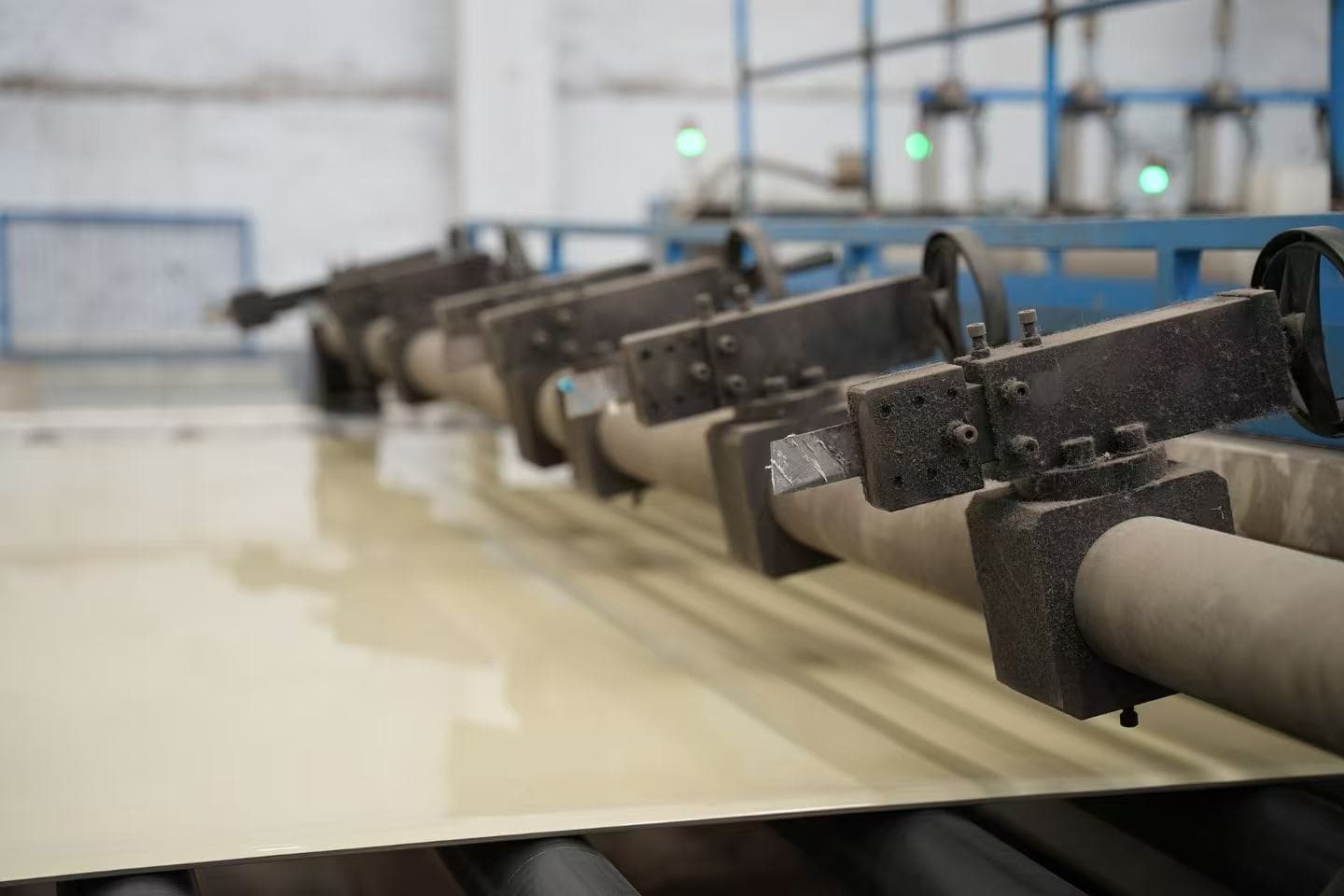
XLD’s About and factory page provides existing manufacturing photographs and company information. Treat these as a starting point for supplier evaluation, then confirm the capacity, process and schedule applicable to your order. Do not infer a particular export history or customer approval from factory images.
Put the sheet requirements in writing
A usable RFQ should specify:
- Material: PP-H/PPH or the required designation; a nominated grade if essential, otherwise ask the manufacturer to propose and identify one. State recycled-content, additives or other formulation restrictions where they matter.
- Size: thickness, length and width, with tolerances and units. Separate nominal sheet dimensions from finished-part dimensions.
- Quantity: sheet count by size, trial quantity and any expected repeat demand. If quoted by weight, agree how quantity and weight will be determined.
- Appearance: colour, surface finish, protective film, acceptable marks and flatness requirements. A colour match is not proof of grade equivalence.
- Fabrication: full sheets, cut panels, holes, CNC features or welded assemblies; include the current drawing revision and acceptance dimensions.
- Service conditions: chemicals and concentrations, temperatures, cleaning, loading, support and indoor or outdoor use.
Check the PP Sheet and PPH Sheet pages for the current product scope. Availability, tolerances and any nonstandard sizes need written confirmation. A sheet thickness range does not establish a safe equipment design.
Separate material data, quality documents and samples
Ask for the exact document needed rather than a general request for “certificates.” The following serve different purposes:
- Technical data sheet: identifies the proposed grade and typical properties with test methods and conditions. Clarify whether it covers the input resin or finished sheet; typical values are not automatically contractual acceptance limits.
- Batch or inspection record: should identify the supplied lot, what was measured, the method and agreed limits. Confirm availability and scope before ordering.
- Management-system certificate: concerns the named organization and stated scope. Verify the holder, site, dates and current status with the issuer where relevant; it does not certify an individual sheet’s performance.
- Application-specific evidence: request relevant evidence if the project requires food or drinking-water contact, flame behaviour or another special condition. Generic PP-H terminology does not establish compliance.
XLD’s material document hub explains document requests. Do not assume a grade-specific TDS, batch test report or special approval is available merely because the company publishes credentials. Ask what can actually be supplied for the proposed order and record any unresolved requirement.
Agree what a sample is intended to demonstrate: appearance, measured thickness, machining behaviour or a trial weld. Record its grade identification, dimensions and connection to the proposed production material. A sample is useful for an agreed trial, but it does not prove the entire batch or long-term performance. For a critical duty, agree the required independent testing or engineering review before purchase.
Agree inspection and release criteria
Before paying for production, put the acceptance requirements into the quotation or purchase order. Define the dimensions to inspect, measurement method, sampling plan, surface criteria and documents required before shipment. If a third-party inspection is needed, agree its timing, access, cost and the action to take if results do not meet the order.
Keep the approved specification and drawing revision attached to the order. State how substitutions will be proposed and approved. Compare supplier quotations on material identity, fabrication scope, inspection, exclusions and total delivery cost, rather than unit price alone.
Plan packaging and transport around the actual load
Discuss how the sheets will be supported, protected from edge damage and restrained during handling. Confirm pallet or crate dimensions, stack arrangement, protective film or interleaving, lifting access, gross weight and shipping marks. Request packing photographs where useful. Do not assume all protective film is suitable for extended outdoor storage.
Give the supplier the destination and unloading constraints, including forklift access or limits on package size and weight. Ask for the production lead time, the point from which it starts, inspection time and estimated dispatch date. Distinguish factory readiness from transit time and customs clearance; none is an arrival guarantee unless specifically agreed.
State the named place or port and the Incoterms® 2020 rule in the quotation. The International Trade Administration’s overview explains how these rules allocate delivery tasks, costs and risks. Confirm freight, insurance, clearance responsibilities and excluded destination charges separately. Payment terms, product acceptance and remedies also need written agreement.
Send XLD a complete inquiry
Use XLD’s sheet inquiry page to provide the application and specification. For drawing-based work, follow the existing email or WhatsApp instructions on that page to share the drawing; do not assume the form includes file upload.
Include these details in your message:
- Your company, destination country and intended application.
- Required material or a request for a grade proposal, with operating conditions.
- Thickness, length, width, tolerances, colour and quantity by size.
- Drawing revision and required cutting, machining or welding scope.
- Documents, samples and inspection needed before order acceptance or shipment.
- Packaging constraints, requested delivery date and delivery rule with named place or port.
Ask XLD to identify the proposed grade, confirm available documents and samples, and list any exceptions alongside price, quotation validity, payment terms and lead time. Resolve those exceptions before converting the quotation into an order. This makes the inquiry useful for both a trial purchase and a repeat supply arrangement without assuming unverified performance, certificates or shipment commitments.
Before dispatch, agree the arrival checks using the industrial plastic sheet receiving checklist. Align the dimensions, visible-condition checks and document review with the specification accepted for the order.
Sources & scope
Discuss your application
Bring the material, dimensions and operating conditions. We will review the requirements for your project.
Request a Quote