
General procurement guidance; not a project-specific design approval.
Define what the enclosure must protect and support
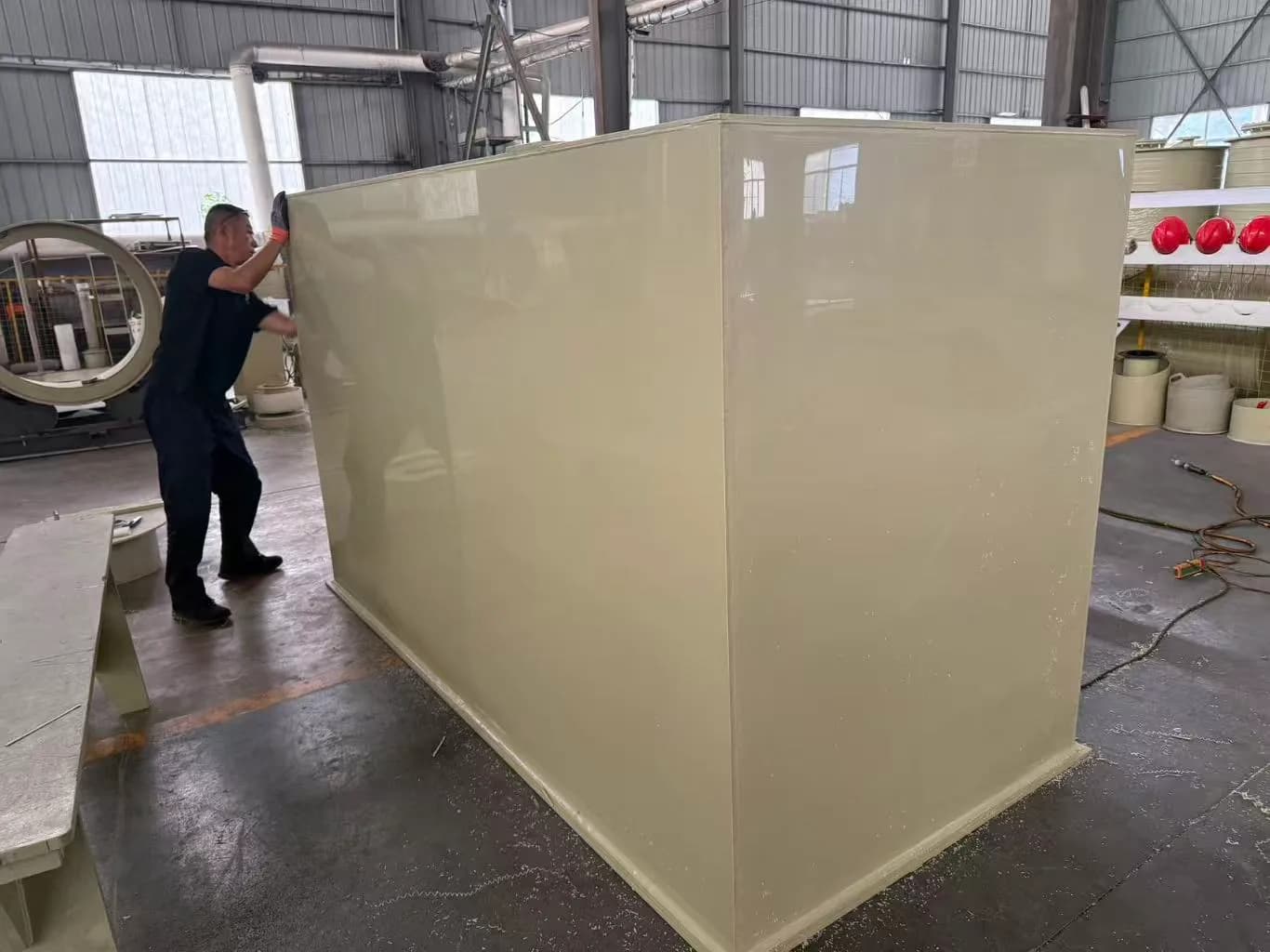
A custom welded PP enclosure may be a machine cover, equipment housing or sheet-built box around a process component. Its drawing should explain its function as well as its outside dimensions: what sits inside, how it is supported, which openings must align, how operators gain access and what the enclosure will encounter in service. These are application examples, not published customer cases.
Xin Longdi offers drawing-based cutting, CNC machining, plastic welding and assembly for custom components and structures, with scope confirmed for each project. Start with the custom fabrication page and the PP sheet page. A material name or workshop photograph does not establish a load, ingress, electrical or fire rating for a particular enclosure.
Select material and thickness around the whole assembly
PP is a material family; PP-H or PPH denotes the homopolymer type. Xin Longdi uses PP sheet and PPH sheet for the same product in its business, while the exact commercial grade and any special formulation need order confirmation. The PP and PPH terminology guide explains the naming.
Give the designer the service temperature, exposure time, chemicals or cleaning agents, indoor or outdoor conditions and any project-specific regulatory requirement. Request evidence for the proposed grade where the application needs it; do not infer a particular chemical compatibility from “PP” alone.
For thickness and reinforcement, show panel spans, support points, mounting method, internal equipment weight, handling loads and the duration of loading. Thermoplastics can deform under sustained load, so a short-term property or the thickness of an unrelated box is not a complete structural basis. SIMONA’s technical handbook discusses long-term thermoplastic behaviour in general; it is not a design approval for an XLD enclosure.
If the enclosure must carry equipment or be stacked, identify the load cases and who is responsible for approving the structure. State whether stacking is required during use, storage or transport; those are separate conditions. Do not specify an allowable load or stacking height without a project-specific design review and agreed evidence.
Turn the drawing into a manufacturing package
A useful OEM package separates a finished enclosure drawing from individual panel drawings and identifies the revision of each. Mark the outside envelope, internal clearance, panel interfaces and critical dimensions that affect fit. For each opening or machined feature, identify its location relative to a stated reference and the component it must accept.
The supplier can review a typical sequence as follows:
- Material and blanks: confirm grade, thickness, colour or surface requirements, and identify which panels are cut from sheet.
- Cutting and CNC features: supply panel outlines, holes, slots, cut-outs and any mating-part details. State which dimensions are critical and how they are to be checked.
- Welding and assembly: identify the joints, access for fabrication, proposed hardware or inserts, and whether components are supplied by the buyer or included in the offer.
- Inspection and handover: agree the dimensions and appearance criteria to be checked, the records required and any trial fit or other project-specific acceptance activity.
The available process and achievable tolerances are confirmed against the actual drawing; this guide does not assign standard tolerances. For a detailed drawing checklist, see CNC Plastic Machining RFQ.
Resolve reinforcement, interfaces and quality before approval
Describe mounting feet, brackets, stiffeners, lids, doors, removable panels and access points where they are required. Show equipment attachment points and connected loads on the drawing. Have the responsible designer review local support and possible deformation under the specified duty; simply adding a thicker panel or more welds is not an engineering acceptance method.
Identify the sheet and welding-material grades and ask who confirms their compatibility for the proposed process. Agree the applicable procedure and inspection evidence before order acceptance. SIMONA’s welding instructions illustrate material-specific processing guidance for its own products, not universal settings for an XLD order. The welding rod selection guide explains the information to request.
A visual inspection, a dimensional check and an agreed functional or assembly test answer different questions. Specify the required acceptance criteria, sample or test scope and responsible party in the purchase documents. Do not assume an enclosure is sealed, certified or rated merely because its panels are welded.
Compare assembled and flat shipment as separate quotations
A finished welded enclosure arrives in its agreed assembly state; the buyer should give the supplier the transport envelope, handling points, destination access and protection requirements. A completed assembly may take more space than its separate panels, depending on the design and packing arrangement.
A flat or partially assembled shipment can be discussed where the design permits it. Define the panel identification, protective packing, supplied fasteners or joining materials, assembly drawings and who will perform and inspect site assembly. Confirm whether the proposed parts and joints are suitable for that delivery arrangement; do not assume Xin Longdi offers flat-pack supply or site installation for every project.
For either option, ask the supplier to identify the package configuration and which activities are included in the quotation. If packages will be stacked, describe the intended handling and ask the party responsible for packaging to confirm the arrangement. An assembled-product load requirement is not the same as an approved transport stacking condition.
Send an OEM RFQ that can be quoted consistently
Include the drawing or CAD file and revision, material and grade, quantity, prototype or production stage, required delivery destination, and a part schedule. Add the operating environment, equipment loads, critical dimensions, openings and interfaces, reinforcement requirements, inspection records and packaging or assembly preference. Mark unknowns and request a written list of assumptions and exclusions.
An illustrative inquiry could read: “Please review the attached PP enclosure drawing for cutting, CNC features and welding. Confirm the proposed grade and fabrication scope; identify the dimensions and checks included; and quote the agreed assembled or panel supply option, packing and delivery requirements. Please flag any design, material or installation questions before we approve the order.”
Use the custom fabrication inquiry to start the discussion and provide the drawings through the available contact channels. For a sheet-only purchase, use the PP sheet inquiry. The Purchasing Guide explains the existing commercial process; the final scope remains subject to the quotation.
Sources & scope
Discuss your application
Bring the material, dimensions and operating conditions. We will review the requirements for your project.
Request a Quote