
General procurement guidance; not a project-specific design approval.
Compare the proposed grades, then the application
PPH and HDPE are different thermoplastics, even when both are offered for chemical-processing equipment. PPH, also written PP-H, is polypropylene homopolymer. HDPE, or PE-HD, is high-density polyethylene. Both belong to the semi-crystalline polyolefin group, but a shared product form does not make their grades, processing requirements or service limits interchangeable.
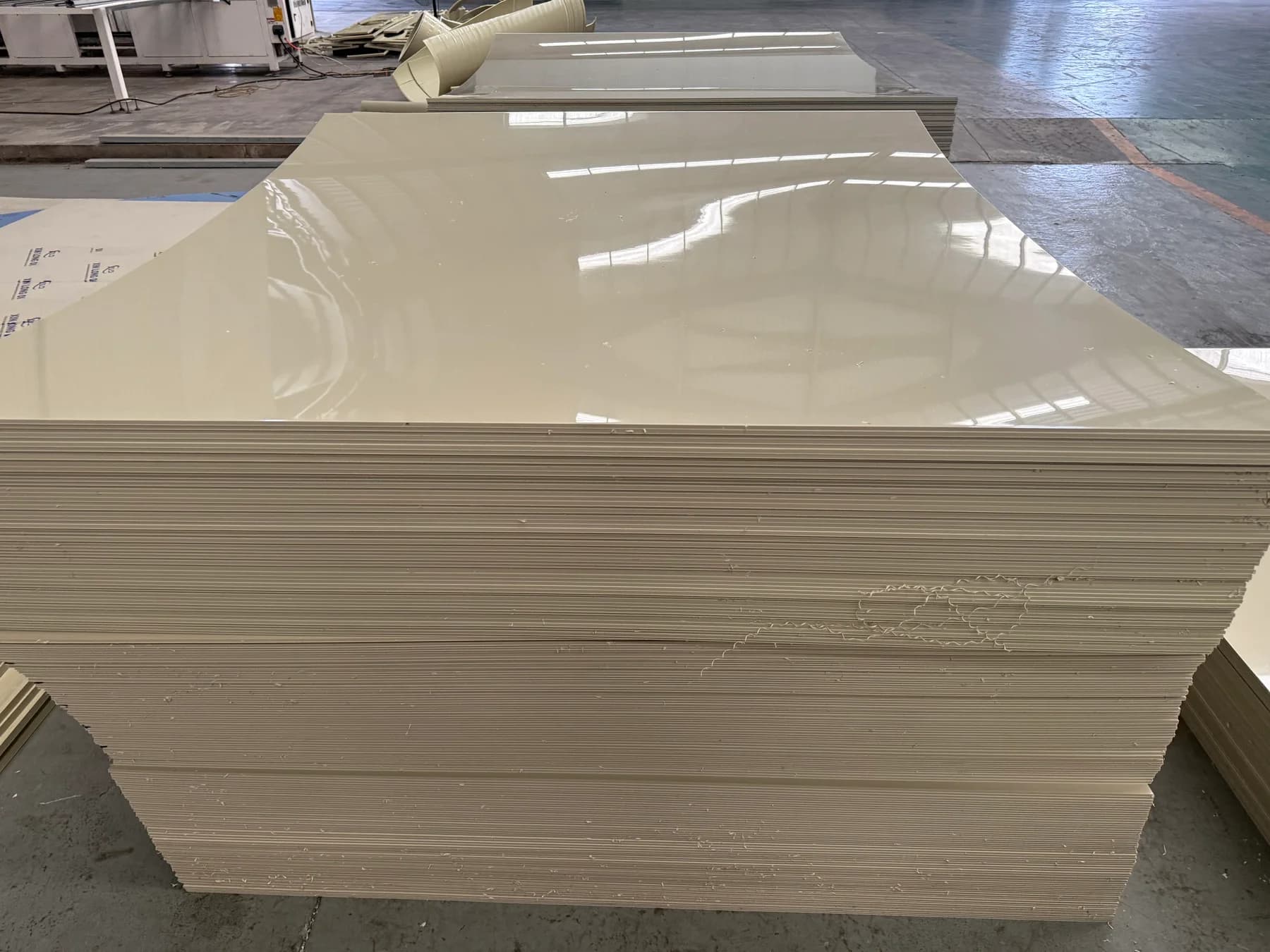
Xin Longdi uses PP sheet and PPH sheet for the same product in its business; the PP versus PPH guide explains that naming. The purchasing decision here is between an identifiable PP-H sheet and an identifiable HDPE sheet for the same duty. Start with the current PPH product page and HDPE product page, then request the grade and documents proposed for your order.
A material comparison table with a defined scope
The numerical entries below are third-party reference examples, not XLD specifications. They come from Röchling’s Polystone P (Homopolymer) grey extruded data sheet, 590977, version 5.0 and Polystone G HD natural extruded data sheet, 590976, version 3.0. Retain the greater-than signs: these are supplier guideline entries, not exact measurements of every sheet.
On smaller screens, swipe across the table to compare all columns.
| Property or procurement question | PP-H reference example | HDPE reference example |
|---|---|---|
| Named reference product | Polystone P (Homopolymer) grey extruded | Polystone G HD natural extruded, PE-HD / PE 300 |
| Polymer identity | Polypropylene homopolymer | High-density polyethylene |
| Density, DIN EN ISO 1183-1, g/cm³ | >0.90 | >0.95 |
| Tensile modulus, DIN EN ISO 527, MPa | >1500 | >1000 |
| Notched impact strength, DIN EN ISO 179, kJ/m² | >6 | >10 |
| Supplier long-term service-temperature entry, °C | 0 to 100; labelled Average | −50 to 80; labelled Average |
| Chemical suitability for the project | Review the exact grade, medium and conditions | Review the exact grade, medium and conditions |
| Fabrication approval needed | Confirm sheet/filler pairing, joint process and drawing | Confirm sheet/filler pairing, joint process and drawing |
The sheets cite methods, but do not fully identify specimen conditioning, test temperature or the complete impact-test configuration in these entries. Ask for matching conditions before making a design comparison. A minimum modulus or impact value does not rank every commercial PP-H and HDPE grade. These guideline data are informational unless contractually agreed by that manufacturer; they are not evidence for an XLD batch, allowable equipment load or chemical-service lifetime.
Chemical resistance depends on the complete exposure
Do not select either material from “acid resistant” or “alkali resistant” alone. Röchling’s chemical-resistance guidance explains why medium identity, concentration, exposure time, temperature and mechanical conditions matter. A favourable entry for one substance does not approve a mixture, cleaning cycle or loaded assembly.
For a useful comparison, send the same service description for both candidates:
- Exact liquids, mixtures, concentrations and relevant contaminants.
- Normal temperature, excursions, minimum handling temperature and duration of contact.
- Cleaning substances, concentrations, temperatures and frequency.
- Liquid level, density information, supports, pressure or vacuum duty and connected loads.
- Indoor or outdoor exposure, intended service period and any additional project requirements.
Ask the proposed material supplier or responsible specialist which evidence covers each candidate and which conditions remain unresolved. Record exclusions as well as positive findings. This makes the comparison useful to an engineer reviewing a chemical tank, environmental-equipment component or electroplating-tank panel, without turning an application label into a compatibility approval.
Interpret temperature, stiffness and impact together
The reference temperature entries are a screening aid. The PP-H example has the higher upper long-term entry, while the HDPE example lists a lower minimum. Neither endpoint is a qualified operating condition for a chemical tank. A lower listed temperature also does not establish the impact resistance of a machined or welded component at that temperature.
Distinguish continuous duty from short excursions, cleaning and cold handling. Do not substitute melting temperature, Vicat softening temperature or a short-term maximum for a continuous-service limit. Request grade-specific advice for simultaneous chemical exposure and load.
The same care applies to stiffness and weight. Density figures with a greater-than sign cannot be used as exact values for a shipping-weight calculation. Tensile modulus is not an allowable panel load. Use the actual geometry, thickness, supports, temperature and duration of loading for design review. SIMONA’s technical handbook explains the role of time-dependent thermoplastic behaviour; it does not calculate an XLD assembly.
Confirm welding and machining for the selected material
Xin Longdi’s fabrication scope includes cutting, CNC machining, plastic welding and assembly, subject to project review. Send finished-part dimensions, holes, mating features, drawing revision and inspection requirements. A material substitution may require review of the manufacturing route and the part design, rather than only changing the sheet description on an order.
For welded work, identify the parent sheet and filler grades and ask the fabricator to confirm the applicable combination and process. Do not assume PP-H and HDPE can be welded directly to each other. SIMONA’s welding instructions distinguish material and process requirements; their settings are not universal XLD parameters. The welding-rod guide provides a pairing checklist.
Buyer questions before material approval
Can HDPE replace PP-H in an existing chemical tank?
Treat the change as a material and fabrication review. Obtain the proposed grade’s chemical evidence, temperature limits, structural assessment and sheet/filler compatibility for the existing duty. An equivalent thickness or a familiar material name is not enough to approve the substitution.
Which material is better for cold handling?
The named HDPE reference has a lower listed service-temperature minimum, but that entry alone does not qualify a finished part for impact. Give the minimum temperature, impact scenario, part geometry and weld details, and request evidence relevant to those conditions.
Can a buyer choose a tank-wall thickness from this table?
No. The table identifies reference properties, not design allowables. Provide vessel dimensions, liquid density and level, supports, pressure or vacuum conditions, temperature, duty duration and connections for engineering review. Ask who is responsible for the structural design before ordering sheet or fabricated equipment.
Make the RFQ a controlled comparison
If elevated-temperature duty is central, request a PP-H evaluation against the actual service envelope rather than relying on the table’s upper endpoint. If cold handling or impact is central, request relevant HDPE grade evidence at the minimum temperature. If chemical compatibility remains uncertain for either material, resolve that question before selecting on stiffness, weight or price.
Ask both offers to identify the proposed grade, sheet or finished-part dimensions, quantity, fabrication scope, documents, acceptance checks, destination and packing requirements. Keep the same drawing and duty revision so the quotations are comparable. Where a supplier proposes a substitution, request the technical basis and written approval from the responsible reviewer.
Use the PPH sheet inquiry or HDPE sheet inquiry to submit that package. For a complete vessel, identify that supply boundary separately; the PPH chemical-tank guide explains the material-to-fabrication handover.
Recheck the material when tank duty changes
Compare the last approved duty with the proposed duty before approving a replacement sheet or reusing the vessel. Use the same item number and mark the changed inputs on the duty sheet and drawing.
- Medium, concentration or temperature: Check the actual mixture, cleaning cycle, exposure time and normal and upset temperatures. Evidence for a different concentration, grade or temperature may not cover the new exposure.
- Liquid level or density: At a fixed point on the tank wall, a higher liquid level or a denser liquid increases hydrostatic pressure. Recheck the wall, joints and supports against the new loading.
- Positive pressure or vacuum: State internal gauge pressure and vacuum for normal and upset conditions, including filling and draining. Internal pressure adds load, and external pressure during vacuum can cause instability. Atmospheric duty alone does not cover either case.
- Supports, loads, environment or design life: Changes to the foundation, piping loads, outdoor exposure or required life can affect load paths and long-term behaviour. Revisit the structural assumptions even if the polymer family stays the same.
Evidence to close the review
Attach the old and new duty sheets, the proposed sheet and welding-material grades, manufacturer data and chemical-resistance evidence applicable to the grade and exposure, and the current drawing and design basis. Ask the fabricator for the proposed joining process and the designer to identify any calculations or tests still needed. Record each open item, its owner and the evidence needed to close it. A supplier chart or a leak test under agreed conditions can answer a specific question. Neither establishes long-term compatibility or structural suitability for a changed duty.
Buyer or operator: provides accurate process conditions and service requirements. Manufacturer or fabricator: confirms the proposed materials, manufacturability and scope of supply or processing. Responsible design engineer: reviews the load cases, performs or verifies the necessary calculations, and approves the design for the stated duty. Record these responsibilities in the RFQ and quotation.
Sources & scope
Discuss your application
Bring the material, dimensions and operating conditions. We will review the requirements for your project.
Request a Quote